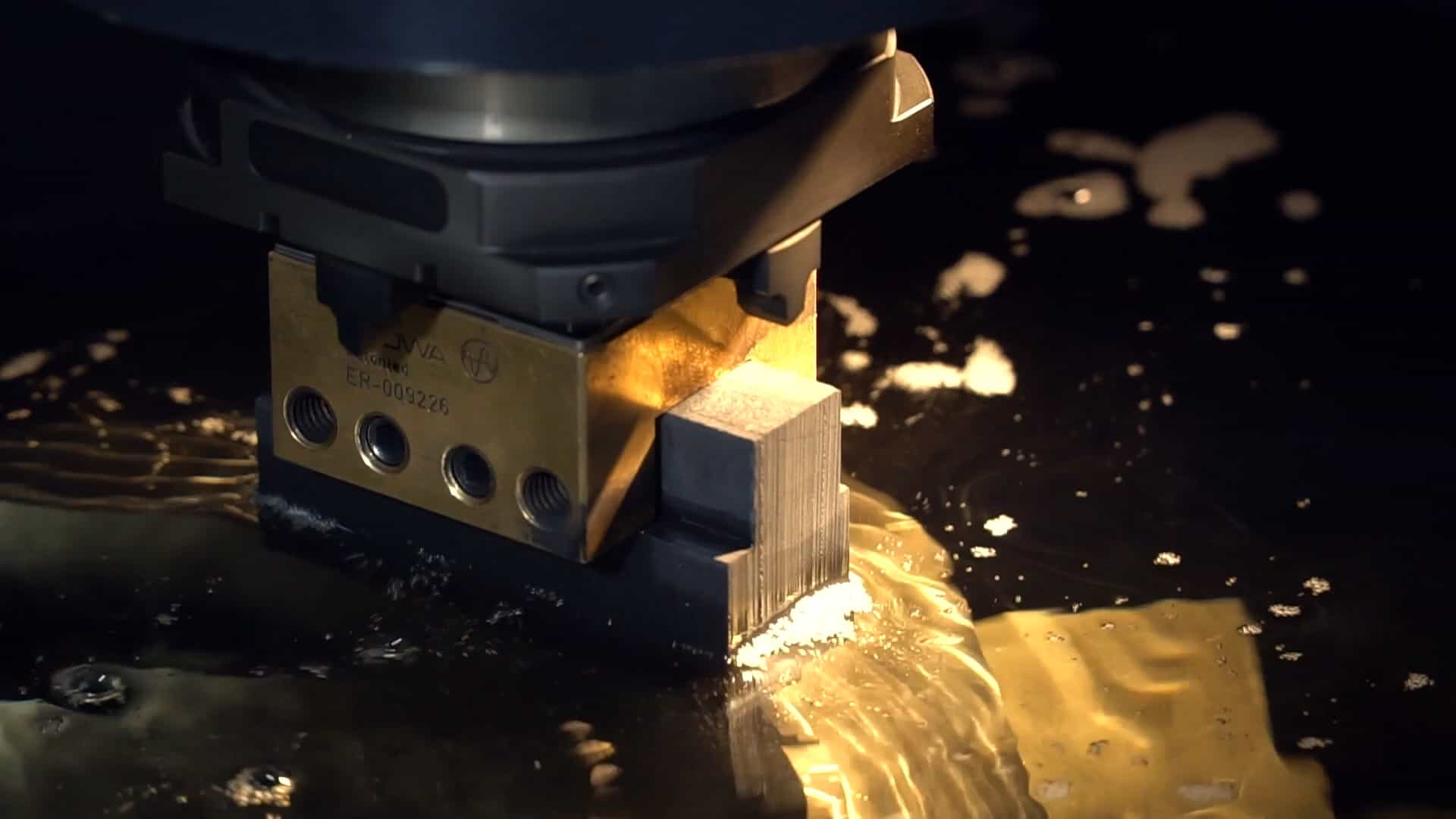
When a mold or a stamping die must deliver stable quality in serial production, every micron matters: geometry, edge sharpness, cavity details, and the way surfaces contact and seal. Many of these features cannot be produced reliably by milling alone — especially after heat treatment.
This is where EDM (Electrical Discharge Machining) becomes a core technology in toolmaking. EDM allows you to create precise shapes in hardened tool steels, produce sharp internal corners, deep narrow cavities, and high-accuracy contours for inserts, punches, and die plates.
Promservice provides EDM services as part of tooling manufacturing and service in Ukraine — including wire EDM, sinker (electrode) EDM, and EDM drilling (“superdrill”) — and integrates these operations with CNC machining, grinding, polishing, assembly, and quality control.
What is EDM in simple terms?
EDM is a non-contact machining process where material is removed by controlled electrical discharges (sparks) between an electrode and the workpiece in a dielectric fluid. Instead of cutting metal with a tool, EDM erodes it with micro-sparks.
This gives EDM three key advantages for toolmaking:
- it can machine very hard materials (including hardened steels);
- it can create features that are difficult for cutting tools (deep, narrow, sharp);
- it applies minimal mechanical force, reducing the risk of deflection in thin or delicate sections.
1) Wire EDM: precision contour cutting for inserts and die components
Wire EDM uses a thin moving wire as an electrode to cut through a conductive workpiece. It is the go-to method for producing accurate 2D/2.5D profiles.
Typical applications in toolmaking:
- cutting die plates, punches, matrix components for stamping dies;
- manufacturing high-accuracy mold inserts, sliders, shut-off elements;
- splitting inserts and creating precise parting or shut-off contours;
- producing components with tight tolerances and repeatable geometry.
Why wire EDM is valuable:
- excellent accuracy and repeatability for contours;
- stable machining of hardened materials;
- clean edges and the ability to refine quality with multiple “skim cuts”;
- ideal when internal corners must be sharper than milling allows.
2) Sinker (electrode) EDM: creating 3D cavities and deep features
Sinker EDM (also called die-sinking EDM) uses a shaped electrode (often graphite or copper) to “burn” a cavity into the workpiece. It is the right choice for complex 3D features where wire cutting cannot help.
Where sinker EDM is used for molds and dies:
- deep cavity zones with narrow ribs and limited tool access;
- sharp internal corners and thin slots that a cutter cannot reach;
- intricate cavity details requiring stable repeatability;
- restoring worn or damaged functional zones by re-machining an insert (after weld build-up, if applicable).
Important note: sinker EDM usually requires electrode manufacturing and correct allowance planning. A well-designed electrode strategy can significantly reduce total machining time and improve surface quality.
3) EDM drilling (“superdrill”): small, deep holes in hard materials
EDM drilling machines are designed to make small-diameter, deep holes in conductive materials — even in hardened steels.
Common tooling tasks:
- drilling start holes for wire EDM cuts;
- creating vent or auxiliary holes in difficult-to-reach zones (depending on part and mold design);
- producing deep holes where conventional drilling is unreliable due to hardness or aspect ratio.
In toolmaking, superdrill is often a “support process” that improves speed and manufacturability of the overall project.
Why EDM is essential for molds and stamping dies
EDM is not used “because it’s modern.” It is used because it solves specific toolmaking problems:
- Hardened steels: you can machine after heat treatment, keeping geometry stable.
- Sharp internal corners: milling always leaves a radius; EDM can achieve much sharper details.
- Deep and narrow cavities: EDM can reach where cutters cannot.
- High-precision interfaces: shut-offs, parting features, and die clearances require accuracy.
- Low mechanical stress: useful for slender punches, thin-wall inserts, and delicate geometry.
For stamping dies, EDM is often critical for:
- precise punch and die contours;
- clean, repeatable clearances that impact burr level and tool life;
- stable geometry in hardened wear components.
For injection molds, EDM is often critical for:
- cavity details, deep ribs, and tight internal geometry;
- inserts and shut-off surfaces with strict sealing requirements;
- complex components such as sliders and lifters with constrained access.
EDM vs milling: when each makes sense
A productive toolmaking workflow uses the best method for each feature:
- CNC milling is usually faster for open surfaces and roughing.
- EDM is typically chosen for hardened blocks, sharp corners, deep cavities, and high-precision contours.
- Grinding and polishing deliver final flatness and surface finish where required.
Promservice combines these processes so the tool is not only “machined,” but ready for stable production.
What affects EDM quality and cost
For customers, the most important cost drivers are:
- material type and hardness;
- thickness (for wire EDM) and cavity depth (for sinker EDM);
- required tolerance and surface finish;
- number of electrodes and machining stages (roughing + finishing);
- flushing conditions and access to the machining zone;
- how well the CAD model considers manufacturability.
A clear technical brief at the start helps avoid unnecessary rework.
What to provide when requesting EDM work
To quote and plan EDM operations efficiently, it helps to provide:
- 3D model and drawings (latest revision);
- material grade and hardness (if already known);
- required tolerances and critical dimensions (CTQ);
- required surface finish (if cosmetic/functional);
- quantity (single part, prototype, serial spare parts);
- context: injection mold insert, stamping die element, punch, matrix plate, etc.
Need EDM for molds or stamping dies in Ukraine?
Promservice performs wire EDM, electrode (sinker) EDM, and EDM drilling, and integrates EDM into full-cycle tooling manufacturing, repair, and modernization. Contact us — we will review your task, recommend the optimal machining route, and deliver parts and tooling elements with predictable accuracy and stable performance.