In plastic injection molding, customers often say: “We need a nice surface.” But “nice” can mean very different things: mirror gloss, satin, technical matte, anti-scratch texture, leather-like grain, or a surface that hides weld lines and flow marks.
That is why surface requirements should be defined in an engineering language — most commonly SPI finishes and VDI textures. Correct specification helps you get predictable appearance, stable demolding, and repeatable production. It also prevents the most common conflict in tooling projects: when the part “works” but the surface “doesn’t look right.”
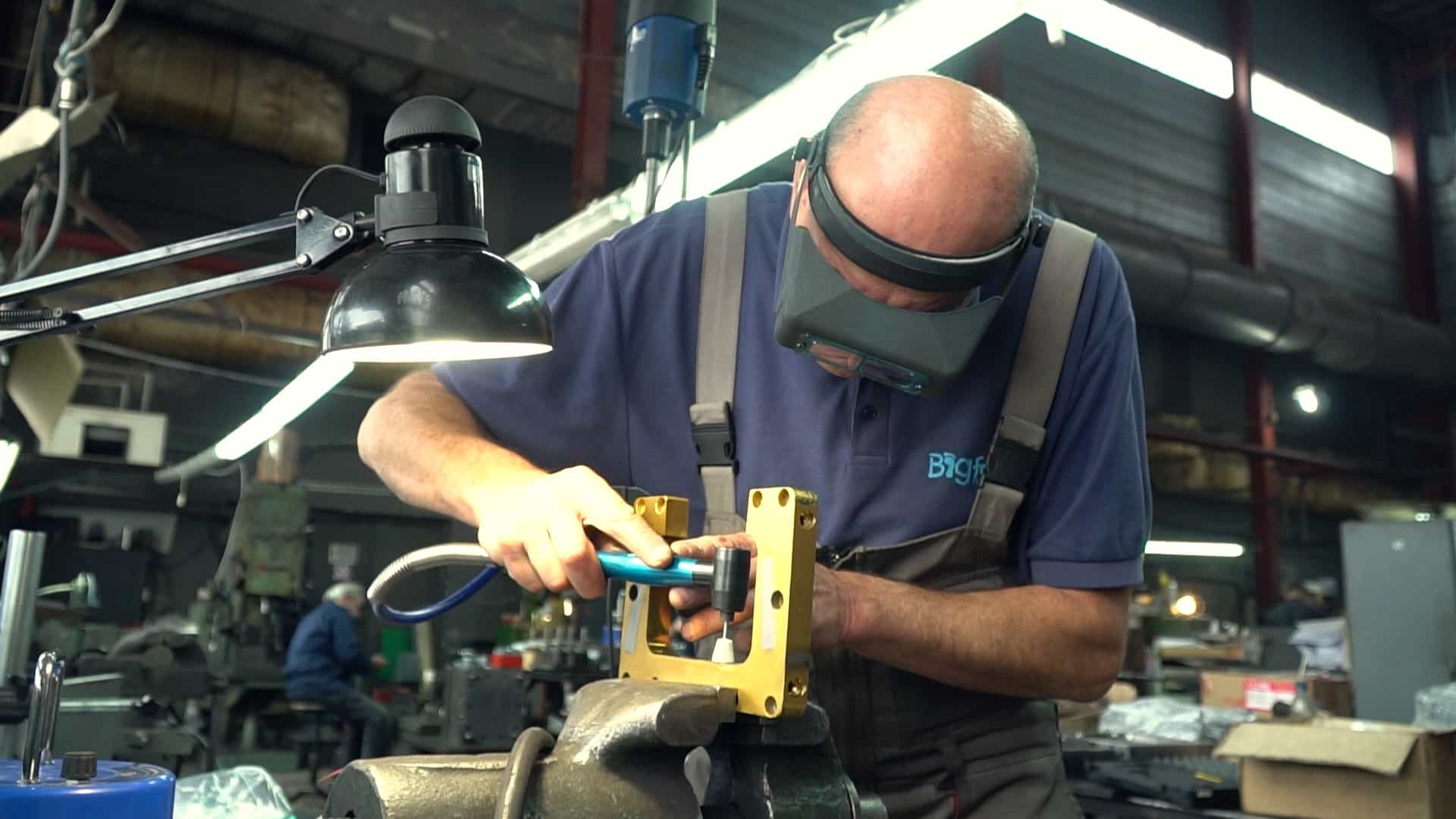
Promservice designs and manufactures injection molds in Ukraine and performs finishing operations — including grinding and polishing of mold components, as well as repair and refurbishment of working surfaces to restore appearance and function.
Why surface finish is more than aesthetics
A mold surface influences several key production factors:
- Appearance and brand perception (gloss, matte, texture uniformity).
- Demolding and ejection stability (a rougher texture can increase drag; a mirror polish can reduce sticking in some cases).
- Defect visibility (textures can hide flow marks; high gloss can reveal every imperfection).
- Wear and maintenance (some surfaces are more sensitive to scratches; textured areas can trap deposits).
- Part function (grip surfaces, sealing interfaces, optical requirements).
If a cosmetic surface is specified incorrectly, you can end up polishing for days — or reworking the cavity after trials.
SPI and VDI: what do they mean?
SPI (commonly used in North America and many global projects) is a finish reference for mold surface quality. It’s typically used to define polishing levels — from high gloss to stone finishes and blast finishes.
VDI (often VDI 3400) is commonly used to define texture roughness levels and textured appearances (matte and grain patterns), frequently associated with EDM texture or etched textures.
In practice:
- specify SPI when you need a controlled polishing level (gloss/satin/technical surface);
- specify VDI when you need a defined texture or matte roughness level.
Choosing between gloss and texture: what to consider
Before you write “SPI A1” or “VDI 27” in a drawing, clarify what matters most:
- Is the part cosmetic (visible to the end user) or internal?
- Do you need to hide flow lines and minor molding marks?
- Is the part touched often (fingerprints, scratches)?
- Do you need easy cleaning or chemical resistance on the surface?
- Are there optical zones (lenses, windows) requiring special finish?
- Is the part difficult to eject (deep cores, ribs, large surface contact)?
A glossy surface can be impressive, but it is also unforgiving: it shows gate blush, weld lines, and even tiny polishing defects. A well-selected texture can provide a premium look and better defect masking — but it can increase ejection force.
Common SPI finishes in real projects
Without going deep into the full standard, the practical interpretation is:
High gloss polish (SPI “A” types) Used for premium appearance, transparent parts, reflective surfaces, and high-end housings. Requires high-quality steel and careful polishing sequence.
Semi-gloss / satin (SPI “B” types) Often used for consumer products where you want a clean look but lower sensitivity to scratches and minor molding marks.
Stone finish / technical matte (SPI “C” types) A robust choice for technical housings, internal parts, and surfaces where glare should be reduced.
Blast finishes (SPI “D” types) Matte finishes created by dry blasting. Useful for “non-cosmetic” surfaces, but requires stable blasting parameters and good documentation to match it later.
The main idea: polishing level should match the function of the surface and how realistic it is to maintain it in production.
VDI textures: when matte needs to be controlled
VDI textures are often chosen when you need:
- uniform matte surface without glare;
- scratch-hiding and fingerprint-friendly appearance;
- a specific “grain” look for consumer or industrial products;
- stable visual consistency across production batches.
Textured surfaces can also reduce the visibility of weld lines and flow marks — but they require good venting and stable processing to avoid “shadows” and gloss variation.
How the required surface is achieved: from machining to final finish
A mold surface is the result of a full process chain. To achieve a defined SPI/VDI level, the toolmaker must control:
Base machining quality (CNC / EDM) Tool marks, EDM layer condition, and corner radii influence how long polishing takes and how stable the final finish will be.
Heat treatment and steel selection Some steels polish better than others. Hardness, microstructure, and quality grade matter — especially for high-gloss cavities.
Grinding and fitting Flatness and sealing areas (shut-offs) must be correct. A beautiful polish cannot compensate for poor shut-off geometry.
Polishing sequence Professional polishing uses step-by-step abrasives and controlled direction changes to remove previous scratches without creating waves or “orange peel.”
Texturing and matching If a VDI texture or grain is required, the surface must be prepared accordingly. Later repairs must match the texture — which requires documentation and experienced finishing.
Promservice integrates finishing operations into the mold manufacturing workflow so that surface requirements are achieved consistently, not “by luck.”
What to specify in drawings and technical requirements
To avoid misunderstandings, include:
- Surface requirement per zone, not only “overall.” Many parts need different finishes on different faces.
- Reference standard: SPI or VDI (and value/grade where applicable).
- If cosmetic: define what is “acceptable” (gate mark, weld line visibility, gloss level).
- Part orientation and visible faces (A-surface vs B-surface).
- Texture direction requirements (if important for design intent).
- Any limitations: “no EDM texture visible,” “no polishing swirl,” “no sink witness on A-surface,” etc.
If you have a reference part, photo, or sample plaque, share it — it improves speed and accuracy dramatically.
Typical issues and how to avoid them
Issue 1: “Same SPI number” but different appearance Gloss perception depends on lighting, polymer type, color, and processing. Solve it by using consistent evaluation conditions and defining acceptance photos.
Issue 2: Texture mismatch after repair If a cavity is welded or reworked, texture can change. Avoid this by using localized inserts (replaceable) and documented texturing parameters.
Issue 3: Drag marks and sticking on textured surfaces Texture increases friction. Solutions include draft angle review, controlled texture depth, and stable ejection design.
Issue 4: Deposits and staining Some polymers and additives create build-up, especially on matte textures. Maintenance routines and correct process windows help keep surfaces clean.
Promservice services for polishing and surface requirements
Promservice supports projects where surface quality is critical:
- mold design with clear A-surface / B-surface definition;
- manufacturing of mold cavities and inserts with required finish planning;
- grinding, fitting, polishing of tooling components;
- repair and refurbishment of worn surfaces to restore finish and sealing;
- modernization through replaceable inserts in high-wear or high-cosmetic zones.
We help customers select a finish that is both visually acceptable and practical for serial production.
Need a mold with controlled SPI/VDI surface in Ukraine?
Contact Promservice — we will review your part, recommend the best surface approach, and manufacture or restore tooling to achieve the finish you need with repeatable production quality.